Have you ever been ghosted? Asking yourself what wrong did you do? Why don’t he answer your calls? Why he suddenly change? Well, in this blog you can learn what does ghosting means, why do people ghost, what impact it has on us and what you can do to deal with it.

Why do People Ghost?
We cannot say why they suddenly change but maybe they;
- Are avoiding their emotional discomfort
- Want to be alone
- Want to hurt you intentionally
- Are pressured by their peers
- Want to get rid of you
- Are busy to their work
- Found someone better than you
- Are not interested in you
What Impact it has on Us?
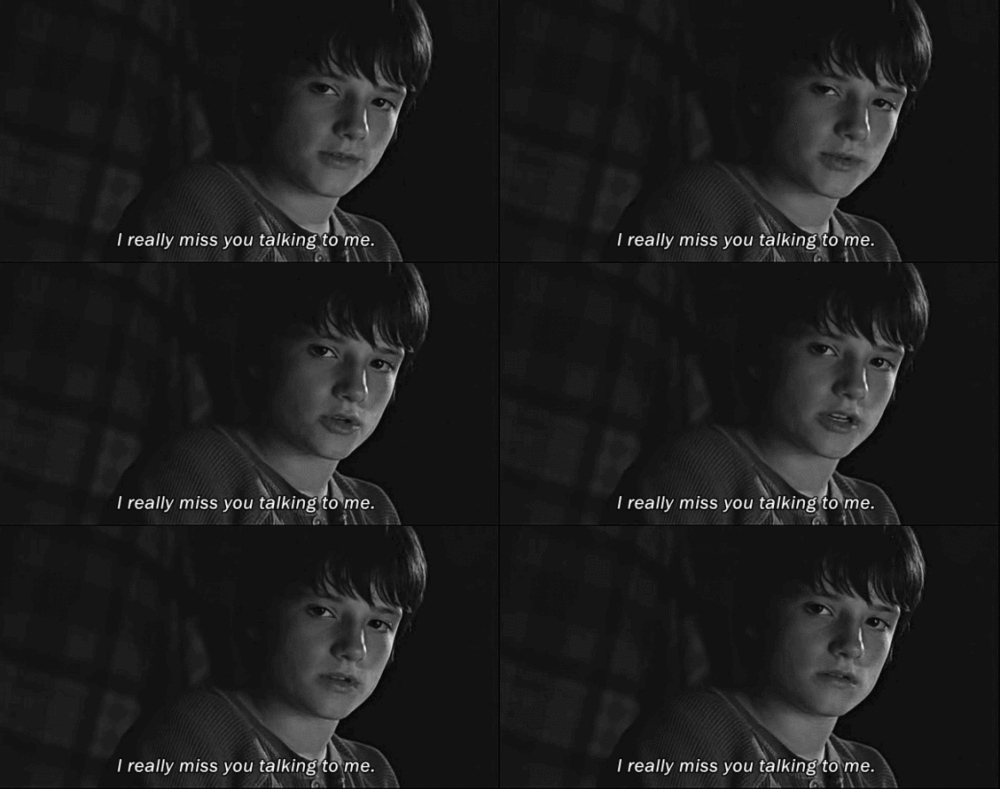
Social rejection activates the same pain pathways in the brain as physical pain. In fact, you can reduce the emotional pain of rejection with a pain. But in addition to this biological link between rejection and pain, there are some specific factors about ghosting that contribute to the psychological distress.

One of the most insidious aspects of ghosting is that it doesn’t just cause you to question the validity of the relationship you had, it causes you to question yourself. Why didn’t I see this coming? How could I have been such a poor judge of character? What did I do to cause this? How do I protect myself from this ever happening again? This self-questioning is the result of basic psychological systems that are in place to monitor one’s social standing and relay that information back to the person via feelings of self-worth and self-esteem. When a rejection occurs your self-esteem can drop, which social psychologists propose is meant to be a signal that your social belonging is low. If you have been through multiple ghosting or if your self-esteem is already low, you are likely to experience the rejection as even more painful, and it may take you longer to get over it as people with lower-self-esteem have less natural opioid (pain-killer) released into the brain after a rejection when compared with those whose self-esteem is higher.

Ghosting is the ultimate use of the silent treatment, a tactic that has often been viewed by mental health professionals as a form of emotional cruelty. It essentially renders you powerless and leaves you with no opportunity to ask questions or be provided with information that would help you emotionally process the experience. It silences you and prevents you from expressing your emotions and being heard, which is important for maintaining your self-esteem.
What you can Do to Deal with it?
The important thing to remember is that when someone ghosts you, it says nothing about you or your worthiness for love and everything about the person doing the ghosting. It shows he or she doesn’t have the courage to deal with the discomfort of their emotions or yours, and they either don’t understand the impact of their behaviour or worse don’t care. In any case, they have sent you an extremely loud message that says: I don’t have what it takes to have a mature healthy relationship with you. Be the better person, retain your dignity, and let him or her go peacefully.
 Cianiel Importa's blog